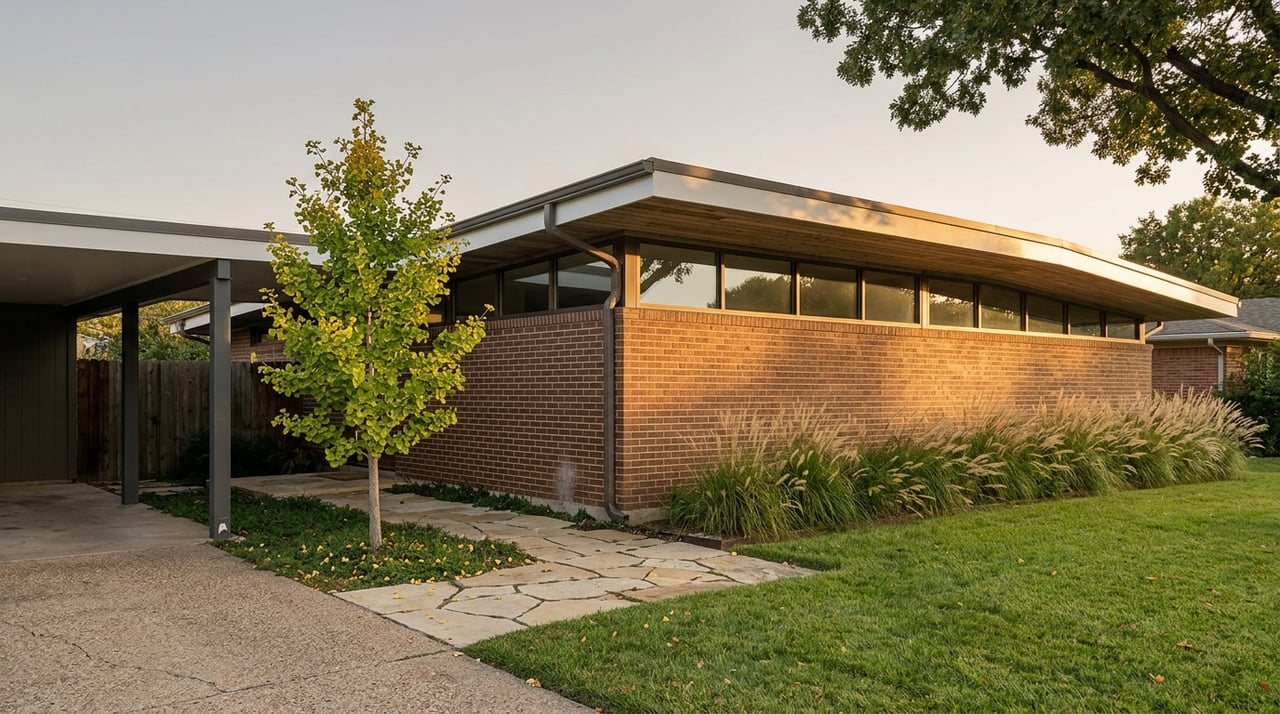
An inspector walks a 1950s rambler in Westwood Hills before a single showing has happened. Roof, siding, garage, then inside to the panel, where the two-prong outlets and the aluminum branch wiring that came standard in a postwar tract house are still doing the job they were built to do seven decades ago. Nobody has made an offer yet. There is no buyer in the room. The seller hasn't even put a sign in the yard.
That order of operations is the part that catches people off guard. In most Twin Cities suburbs, a home inspection is something a buyer arranges after they've fallen for a house. In St. Louis Park, the city gets there first. Every property that sells or changes ownership needs a property maintenance inspection, sometimes called a point-of-sale inspection, and it has to happen before the property goes on the market. If the inspector finds code violations, the city issues a correction notice, and in most cases the seller has to fix them before closing, not just disclose them and move on.
For a city with one of the metro's densest concentrations of mid-century modern housing, that is not a small detail. It is the mechanism that decides whether a rambler sale closes on schedule or gets stuck in repair limbo.
Not Every City Runs This the Same Way
Sellers who've bought or sold in a neighboring suburb often assume every Twin Cities city handles this the same way. It doesn't.
| City | Program | Requirement |
|---|---|---|
| St. Louis Park | Property maintenance / point-of-sale inspection | Required before listing |
| St. Paul | Truth in Sale of Housing (TISH) disclosure report | Required |
| Bloomington | Time-of-Sale housing inspection | Required |
| Golden Valley | Inflow and infiltration (sewer) check only | No general housing inspection |
| Brooklyn Park, Crystal, Hopkins, Osseo, Robbinsdale | Formerly required similar programs | Repealed |
Golden Valley, a suburb with its own significant stock of architect-designed mid-century houses in neighborhoods like Tyrol Hills, only checks for sewer inflow and infiltration issues, not general property condition. And several suburbs that used to run a point-of-sale program dropped it entirely: Brooklyn Park in 2013, Crystal in September 2015, Osseo in January 2016, and Hopkins as recently as January 2021. A seller moving from any of those cities into St. Louis Park is stepping into a stricter, older, still-active program, not a lighter version of what they just left behind.
That difference matters most for the kind of housing stock concentrated on the east side of Highway 100 and around Westwood Hills, where St. Louis Park's mid-century inventory clusters. This is also the neighborhood that's home to one of only two dozen ALCOA "Care-Free" homes ever built and the only one in Minnesota, a reminder of just how much 1950s and 60s original construction is still standing in this part of the city. Original construction means original systems, and original systems are exactly what a code-based inspection is built to catch.
The Sentence That Actually Protects 1950s Sellers
Here's the part that should calm down anyone bracing for a full electrical rewire. The city's own guidance states that corrections generally have to meet the code that was in place when the home was built, not the code in effect today. If a portion of the house was remodeled, only that remodeled section has to meet the code from when the remodel happened.
There's one hard exception: smoke detectors are required in every building regardless of when it was constructed.
That single rule reframes the whole conversation. A 1950s rambler with its original wiring is not automatically failing a 2026 electrical code. The inspection is checking whether the house still meets the standard it was built to, and whether anyone has done work since then that wasn't brought up to the code in force at the time. Aluminum branch wiring on its own is not the crisis a seller might expect. An unpermitted panel swap from 2003 that never got inspected is a much bigger problem.
What Actually Gets Flagged in a Mid-Century Home
The inspection covers siding, roof, garage, and interior systems, and the items that come up most often in this era of housing are predictable once you know the pattern. Missing or non-functioning smoke and carbon monoxide alarms are the most common finding across every Twin Cities city that runs one of these programs. Outdoor faucets without backflow preventers show up constantly too, an inexpensive fix that gets overlooked for years because nobody thinks about the hose bib until someone asks. For houses built with galvanized steel plumbing, deteriorating supply lines can surface as a correction item depending on condition. None of these are expensive individually. What makes them costly is discovering them for the first time during a compressed closing timeline instead of months before listing.
The 90-Day Workaround, and What It Costs Now
When repairs can't be finished before closing, the city allows a temporary property maintenance certificate. The buyer and seller sign an escrow agreement acknowledging the outstanding work and committing to complete it within 90 days of closing. Sufficient funds go into escrow to cover the repairs, the agreement has to be finalized 48 hours before closing, and any open permits on the property have to be closed first.
The math on that workaround has changed. An older regional listing guide quoted the buyer-seller escrow service fee at $50. The city's current fee schedule puts it at $155. The tool still exists and it still works, but it isn't the flat, forgettable line item it used to be, and sellers who assume it's a $50 formality are pricing their timeline wrong.
Why the Timing Matters More This Fall
St. Louis Park is not a slow market where a few extra weeks for repairs disappears into the background. Over the three months ending May 2026, homes sold for a median of $410,000, up 2.6 percent from the same period a year earlier, and the market carries a competitiveness score of 87 out of 100. Homes were selling in a median of 15 days.
Compare that to what's listed right now. As of August 2026, homes on the market in St. Louis Park carry a median asking price of $374,000, and are sitting for a median of 29 days, itself a 6 percent improvement over last August. The gap between what similar homes closed for in spring and what's being asked for in late summer isn't a sign the market cooled off. It's more likely a seasonal shift in what's coming to market, plus sellers pricing with some awareness that a listing has to clear the point-of-sale inspection before it can even go live.
That's the real stakes of this ordinance. In a market moving in two weeks, a correction notice that takes three weeks to resolve isn't a minor inconvenience. It's the difference between capturing a fast-moving buyer pool and watching the listing sit through a slower stretch of the calendar while repairs get sorted out. Getting the inspection done well before you intend to list, not the week you plan to put up a sign, is what keeps a mid-century sale on the same timeline as the rest of the market.
A Couple of Things Sellers Ask
Does this apply if I'm just refinancing, not selling? No. The requirement is tied to a sale or transfer of ownership, not to refinancing a mortgage on a home you're keeping.
My rambler already has some updated wiring. Does the whole house need to meet current code? Only the updated portion has to meet the code in effect when that work was done. Original, untouched sections of the house are held to the code from the year it was built, with the smoke detector requirement applying everywhere regardless of age.
If you're planning to list a mid-century home in St. Louis Park this fall, the smartest move is scheduling the property maintenance inspection well ahead of your target listing date, not after you've already lined up a buyer. Claire Johnston at MinnCenturyMod has walked sellers of Westwood Hills ramblers and Hwy 100 corridor split-levels through exactly this process. Get your instant home valuation and let's map out a timeline that keeps your original 1950s wiring from becoming a closing-week surprise.